If you have a dental emergency, please call us on 010 – 4361604



 Nederlands
 English
Partial denture
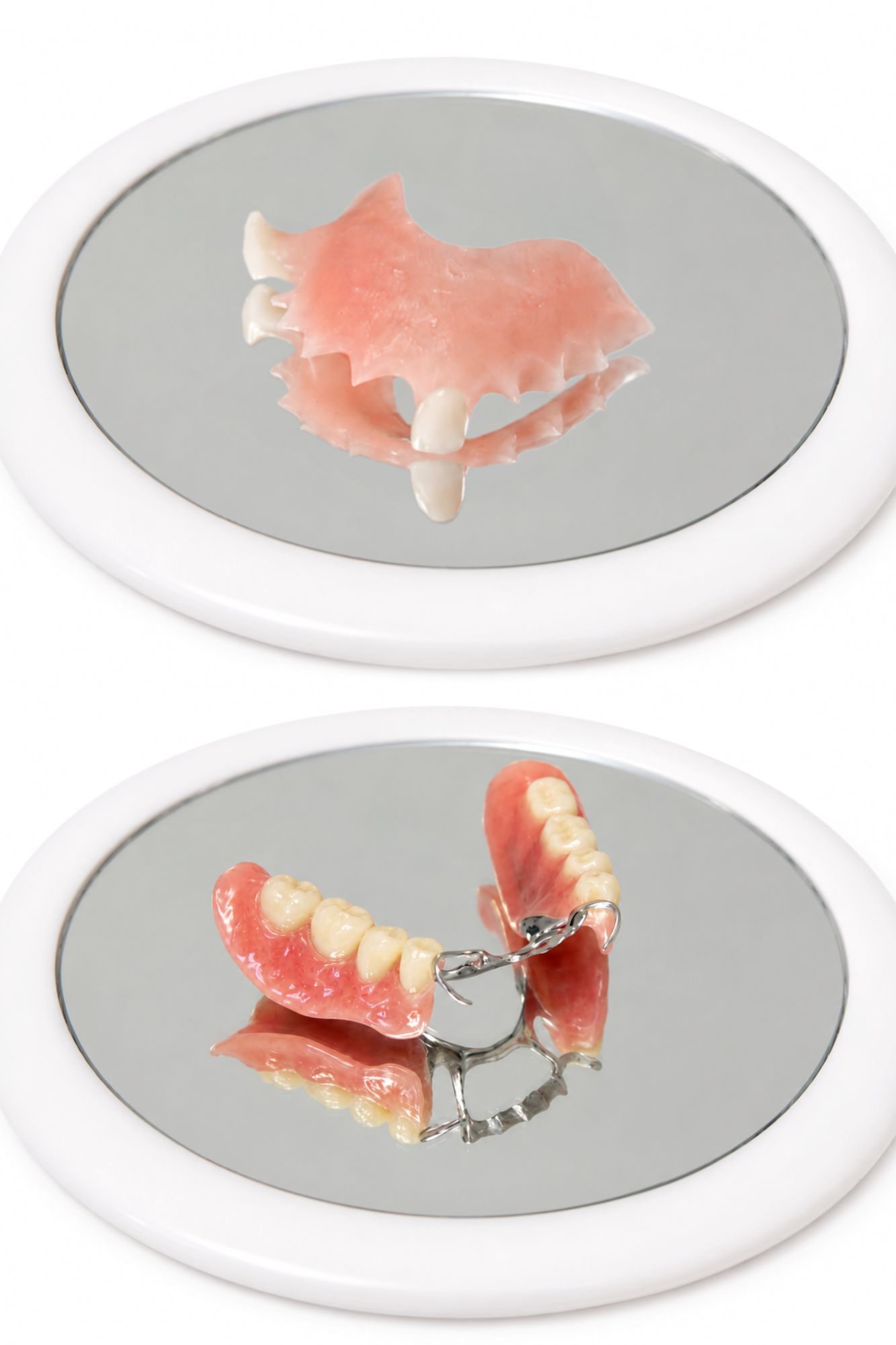
If you are missing several teeth, we can provide either a partial acrylic denture (also known as a plate denture) or a partial metal-frame denture.
General information
About the treatment
Metal-frame partial dentures are stronger and more durable than acrylic partial dentures because they have a metal framework. However, this means that some of the metal clasps may be visible. Another difference is that a metal-frame denture is supported mainly by your remaining natural teeth rather than by your gums.
To ensure a secure fit, the dentist may prepare small recesses in some of your teeth to support the denture.
Jane from TANDZORGLAB will take impressions of your jaws, which are used to create plaster models. These models are then used to make your custom-made acrylic or metal-frame partial denture.
An acrylic partial denture usually takes at least one week to make, while a metal-frame partial denture takes at least two weeks. If you are having a metal-frame denture, an additional appointment will be needed to check the fit of the metal framework.
Once your partial denture is ready, it will be fitted in your mouth.
During the first few days, speaking may feel a little different and some sounds may be slightly more difficult to pronounce. This is completely normal and usually improves naturally as you get used to wearing your denture.
If you continue to experience any discomfort or problems, please contact your dentist. Once your denture fits comfortably, it will be checked as part of your regular six-monthly dental check-ups.
Fees
Fees
The cost of a partial denture is determined individually, as every patient has different dental needs and preferences.
Prior to your treatment, you will receive a personalised estimate of the treatment fees. Please contact your health insurer to check whether you are eligible for reimbursement, as coverage varies depending on your insurance policy.
FAQ
Frequently asked questions
Can’t find the answer to your question? Please feel free to contact us.
An acrylic partial denture is generally less expensive than a metal-frame partial denture, but it also has some disadvantages. Because an acrylic partial denture rests entirely on the gums, the chewing forces are absorbed by the gum tissue. Over time, this may cause irritation or other gum-related problems. Food can also become trapped more easily underneath the denture, which may increase the risk of gum inflammation.
A metal-frame partial denture is supported mainly by the remaining natural teeth and only partly by the gums. This means that the natural teeth absorb a greater proportion of the chewing forces, reducing the pressure on the gum tissue compared with an acrylic partial denture.
The most suitable type of partial denture varies from person to person. Your dentist will discuss the available options with you and help determine which solution is best suited to your individual dental situation.
Food particles can easily become trapped underneath an acrylic or metal-frame partial denture. It is therefore important to clean your denture thoroughly after every meal using a special denture brush and water. Do not use toothpaste, as this may be too abrasive and can damage the surface of the denture.
You should also clean the soft tissues underneath the denture, including your gums, palate and the areas where the gums meet the cheeks. Brush your remaining natural teeth carefully with a soft toothbrush and fluoride toothpaste.
Pay particular attention to removing plaque from the teeth that support the denture, as these areas require extra care.
If you are unsure about the best way to clean your denture, your dentist or dental hygienist will be happy to advise you.