If you have a dental emergency, please call us on 010 – 4361604



 Nederlands
 English
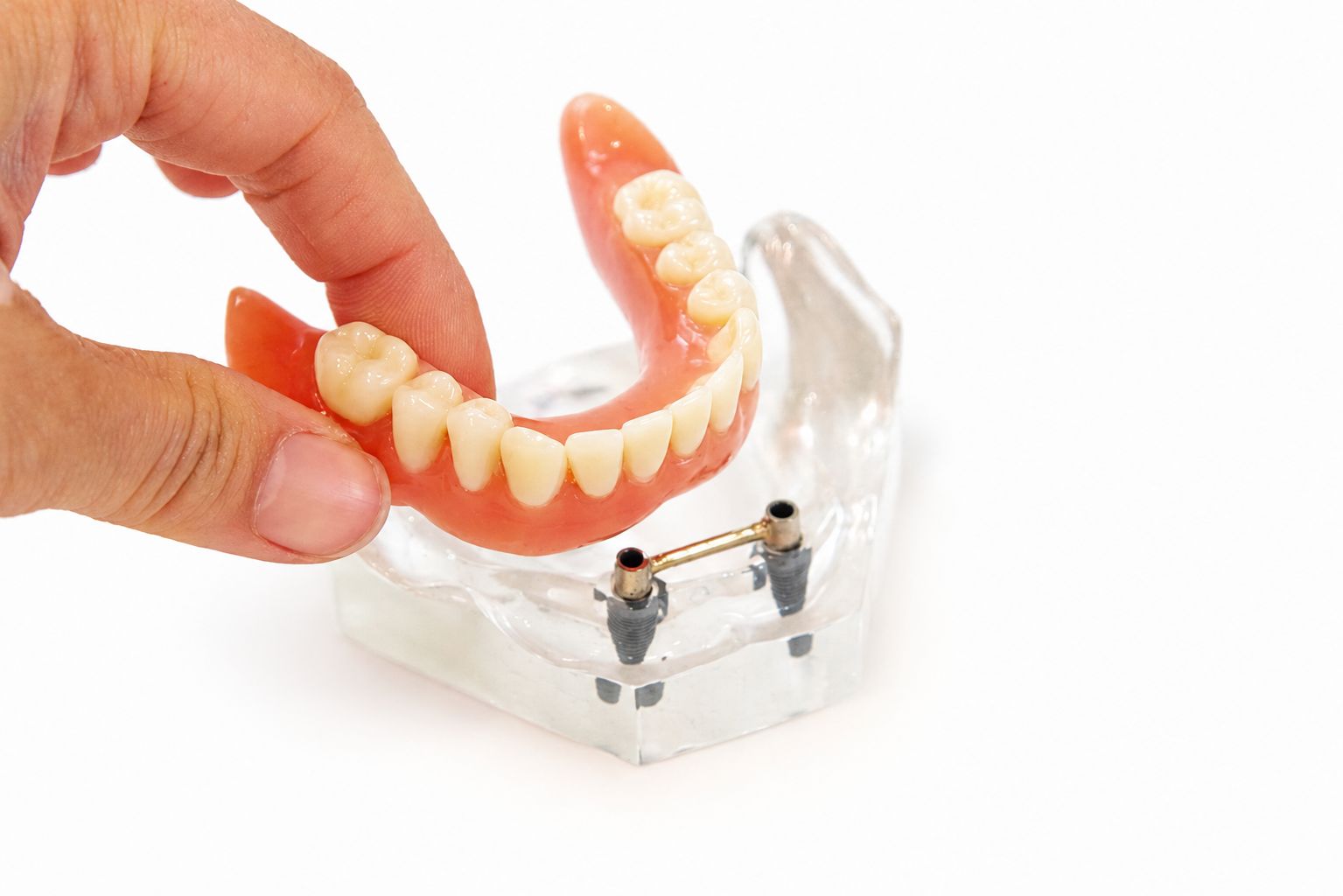
Implant-Retained Denture (Overdenture)
An implant-retained denture, also known as an overdenture, provides a secure and comfortable solution for patients who need a full denture or who struggle with a loose-fitting conventional denture.
General information
About the treatment
If you choose an implant-retained denture, also known as an overdenture, you will often already be wearing a conventional denture. This is usually one of the requirements set by health insurance providers in order to qualify for reimbursement for an implant-retained denture.
If you still have some of your natural teeth, these will be carefully removed under local anaesthetic. Jane from TANDZORGLAB will then fit an immediate denture (temporary denture), so you will not have to go home without teeth. After the teeth have been removed, the jawbone and surrounding tissues need time to heal before the next stage of treatment can begin.
Once the jaw has healed sufficiently, the implants can be placed. This is a relatively straightforward procedure that usually takes around 30 minutes and is performed under local anaesthetic. The implant placement can be carried out by TANDZORGCHIRURGIE.
If you already wear a full denture, the process of switching to an implant-retained denture begins with a consultation. During this appointment, your oral health will be assessed and we will determine whether there is sufficient jawbone to support the implants. If there has been significant bone loss, an additional procedure such as bone grafting may be required before the implants can be placed.
After placement, the implants need time to integrate securely with the jawbone. You will generally experience little discomfort during this healing period and can continue to wear your existing denture. The denture will be adjusted with a soft lining to prevent pressure being placed on the implants.
Under optimal conditions, the healing period may take around 6 weeks. On average, we allow approximately 6 to 12 weeks for the implants to integrate with the jawbone. The exact healing time depends on several factors, including the condition of the jawbone, the type of implant-supported construction and the treatment performed.
During the healing period, your final denture will be made. You will need to visit Jane several times so that the fit, function and comfort of the denture can be carefully checked and adjusted. Once the implants have fully integrated, your final implant-retained denture will be fitted.
Regular follow-up care remains important after your implant-retained denture has been fitted. We recommend a denture check-up every 18 months, as the shape of the jaw can gradually change over time. These appointments help us ensure that your denture continues to fit comfortably and securely. We also recommend having the implants professionally cleaned and checked regularly to help maintain their health and longevity.
Fees
Fees
The cost of an implant-retained denture is determined individually, as every patient has different dental needs and preferences.
Prior to your treatment, you will receive a personalised estimate of the treatment fees. Please contact your health insurer to check whether you are eligible for reimbursement, as coverage varies depending on your insurance policy.
FAQ
Frequently asked questions
Can’t find the answer to your question? Please feel free to contact us.
Your implant-retained denture should be cared for just as carefully as your natural teeth. Inadequate cleaning can lead to irritation or inflammation of the gums around the implants.
Clean your denture thoroughly with a denture brush, water and a mild soap. Do not use toothpaste on the denture, as it can be too abrasive and may damage the surface. If preferred, you can also use a cleaning product specifically designed for dentures.
To keep the gums and tissues around the implants healthy, gently clean them with a soft toothbrush and a small amount of toothpaste.
An implant-retained denture may be a suitable option if:
- You no longer have any natural teeth.
- Your teeth are in very poor condition and several teeth are already missing.
- Your teeth are becoming increasingly loose.
- You have a loose-fitting denture that no longer fits comfortably or securely.
- Your jawbone has reduced to such an extent that a conventional denture no longer has sufficient support.
- You are looking for a more stable, long-term solution and would prefer greater comfort and security than a conventional removable denture can provide.
- You wear an upper denture and find that the palatal coverage affects your sense of taste.
- You have noticed changes in your facial appearance due to loss of jawbone following the loss of your natural teeth.
An implant-retained denture is still removable, but it is securely attached to dental implants. This type of denture is most commonly used in the lower jaw, although it can also be an excellent solution for the upper jaw.
One of the main advantages is improved comfort and stability compared with a conventional denture. In the upper jaw, an implant-retained denture can often be designed without fully covering the palate, which can make it feel much more comfortable.
Dental implants also help preserve the jawbone. Because chewing forces are transferred to the jaw through the implants, the bone continues to receive stimulation. This can help slow down the natural loss of jawbone that often occurs after teeth have been removed.
Because an implant-retained denture is held more securely in place, there is also greater freedom to shape the denture to provide additional support for the lips and cheeks. This can help maintain facial contours and create a fuller, more natural appearance.
With a conventional denture, these possibilities are more limited. Making the denture thicker or heavier may reduce its stability, as the movements of the lips, cheeks and tongue can cause it to shift more easily.
The placement of a dental implant in the jawbone is performed under local anaesthetic. As a result, you should experience little to no discomfort during the procedure, and most patients find the treatment easier than expected.
The anaesthetic usually wears off after approximately 2 to 4 hours. Any discomfort afterwards can generally be managed effectively with a painkiller such as paracetamol. If necessary, your dentist may prescribe additional pain relief, although this is rarely required.
Overall, dental implant placement is generally well tolerated and is not considered a particularly painful procedure.