If you have a dental emergency, please call us on 010 – 4361604



 Nederlands
 English
Veneers
If you would like a more even and attractive smile and orthodontic treatment is not a suitable option, veneers may be a good alternative.
General information
Composite or Porcelain
Veneers can be used to improve the shape or colour of your teeth. They can, for example, close small gaps, repair chipped edges, improve the appearance of discoloured teeth and make slightly misaligned teeth look straighter. A well-made veneer should look natural and blend in with your surrounding teeth. In some cases, a small amount of natural tooth tissue needs to be removed to create enough space for the veneer. We always aim to keep this preparation to an absolute minimum.
Veneers can be made from two different materials: composite or porcelain.
Which option is most suitable for you depends on your individual dental situation and your personal preferences. We will be happy to advise you on the best choice.
COMPOSITE
A composite veneer is made from the same tooth-coloured material used for white fillings. In many cases, little or no tooth preparation is required, which helps preserve as much of your natural tooth structure as possible. The composite material is applied directly to the tooth in layers and carefully shaped to blend in with the rest of your teeth. A composite veneer can usually be completed in a single appointment.
One of the main advantages of composite veneers is that they are relatively easy to repair. If a veneer chips, becomes damaged or discoloured, additional composite can often be applied. If necessary, the veneer can also be replaced.
PORCELAIN
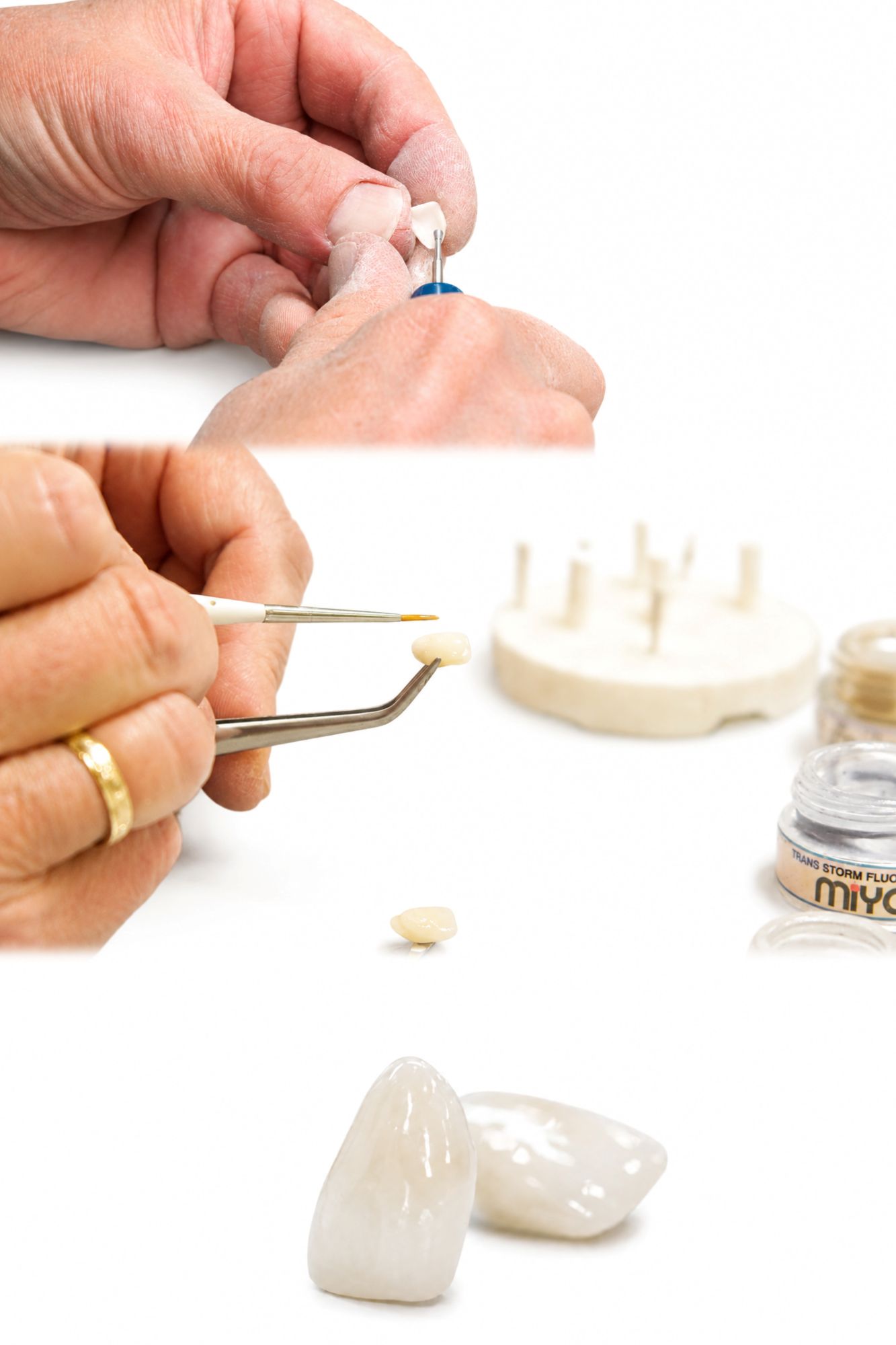
A porcelain veneer is a thin shell of porcelain that is bonded to the front surface of the tooth. To ensure a comfortable and natural fit, a very thin layer of enamel may first need to be removed from the tooth. An impression or digital scan is then taken, which is used by our dental laboratory to create a custom-made veneer that matches the shape, shade and size of your surrounding teeth. The porcelain veneer is then securely bonded to the prepared tooth using a special dental adhesive. Porcelain veneer treatment usually requires two appointments.
An important consideration is that porcelain veneers are more difficult to repair invisibly if they become chipped or damaged. In some cases, replacing the veneer may be the best option.
Fees
Fees
For a personalised estimate of the cost of veneers, you can schedule a cosmetic consultation with your dentist. During this appointment, your dentist will discuss your wishes, assess your dental situation and explain the treatment options that may be suitable for you. You will then receive a tailored treatment plan and cost estimate.
Treatment fees must be paid at the reception desk immediately after your appointment, preferably by debit card or, if necessary, in cash. This overview is intended as a general indication only. As every patient requires an individual treatment plan, the final costs may vary from person to person.
Our fees are based on the Performance and Tariff Decision for Dental Care issued by the Dutch Healthcare Authority (Nederlandse Zorgautoriteit, NZa), valid from 1 January 2026 to 31 December 2026. For more information about dental costs and reimbursements, please visit allesoverhetgebit.nl.
FAQ
Frequently asked questions
Can’t find the answer to your question? Please feel free to contact us.
Having veneers fitted is usually virtually painless. With porcelain veneers, a very thin layer of enamel may need to be removed, which can sometimes cause some temporary sensitivity.
Veneers should feel very similar to your natural teeth. You may need a short period of time to get used to their new shape, and your speech may feel slightly different at first.
Veneers do not require any special additional care. However, maintaining good oral hygiene, as advised by your dentist, is essential to keep your gums healthy and reduce the risk of tooth decay around the veneered teeth.
The lifespan of veneers depends on the material used and how well they are cared for. Porcelain veneers typically last around 10 to 15 years, while composite veneers generally last around 5 to 7 years.
Good oral hygiene, regular dental check-ups and avoiding biting on very hard foods or objects can help your veneers last longer. Teeth grinding can also shorten the lifespan of your veneers.