If you have a dental emergency, please call us on 010 – 4361604


 Nederlands
 English
Oral Hygiene
Your mouth naturally contains many different types of bacteria. Some of these bacteria collect on the teeth and form a sticky layer known as dental plaque.
General information
About the treatment
If dental plaque is not removed regularly, it can harden into tartar and increase the risk of tooth decay and gum disease. Good oral health therefore depends on removing plaque every day by brushing correctly and cleaning between the teeth. This helps reduce the build-up of harmful bacteria in the mouth.
Even with regular brushing, it can sometimes be difficult to remove all plaque effectively. Certain areas of the mouth may also be harder to reach. Regular visits to a dental hygienist or (periodontal) prevention assistant are therefore important to identify and treat potential problems at an early stage. Good oral hygiene is not only essential for healthy teeth and gums, but also contributes to your overall health.
Gingivitis
The gum line, where the gums meet the teeth, requires particular attention when cleaning your teeth. Plaque can easily accumulate in this area and cause inflammation of the gums. When the gums become inflamed, they may appear red and swollen and can bleed when brushing or when gentle pressure is applied. Healthy gums should not bleed. This early stage of gum disease is known as gingivitis.
Periodontitis
If gingivitis is left untreated, it can progress to periodontitis, a more serious form of gum disease. The inflammation can damage the tissues and bone that support the teeth. As the disease progresses, spaces known as periodontal pockets can develop between the teeth and gums. Plaque and tartar can accumulate within these pockets, causing further damage to the supporting tissues and jawbone. Eventually, teeth may become loose and, in severe cases, may be lost or need to be extracted.
At TANDZORG.NL, we make sure that your gum care is provided by the dental professional best suited to your individual needs. If you have severe gum inflammation, significant bone loss or extensive tartar build-up, you will be referred to one of our dental hygienists.
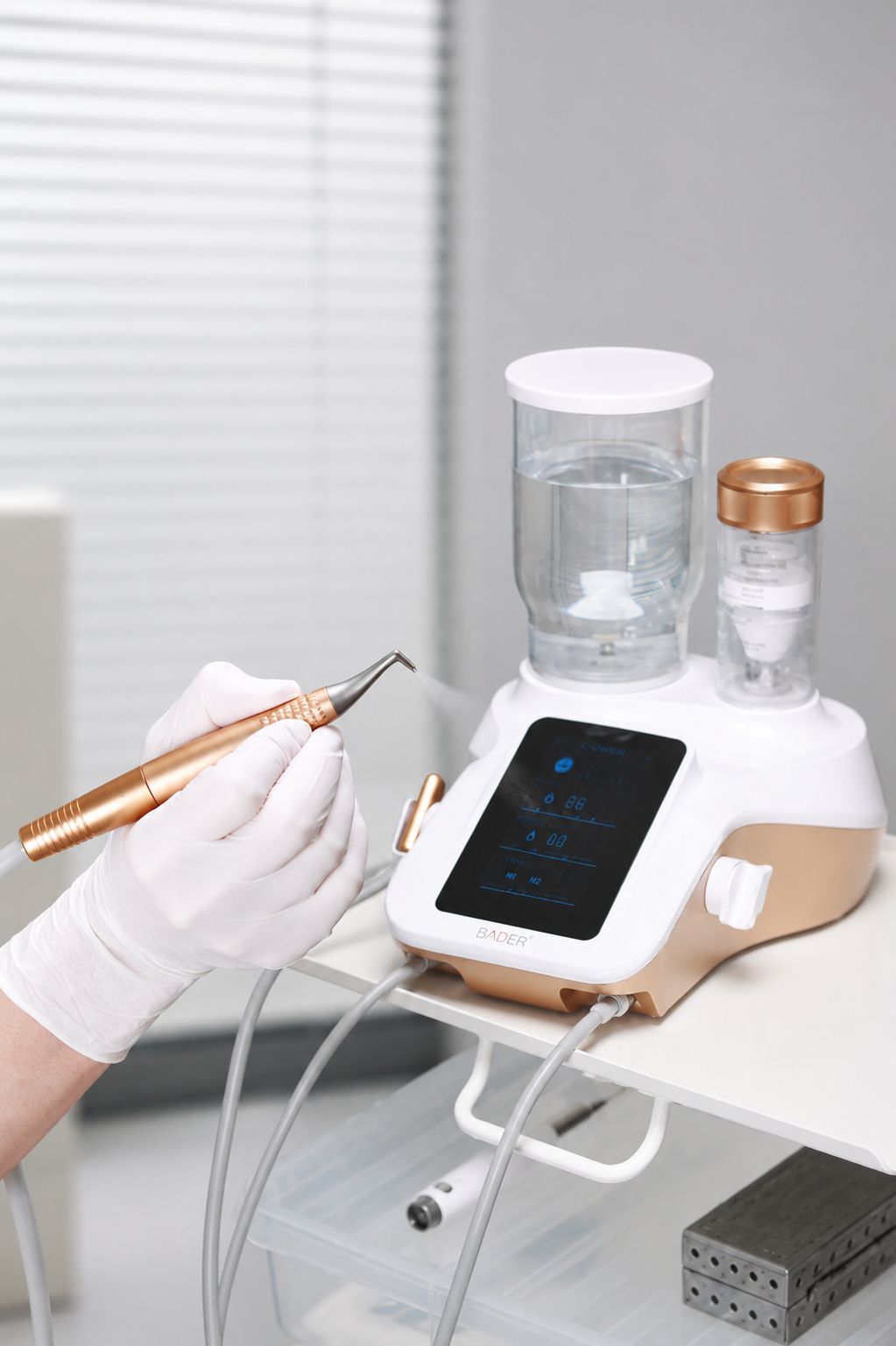
If your treatment mainly focuses on improving your daily oral hygiene to help prevent tooth decay, gum disease and bone loss, you will be seen by one of our (periodontal) prevention assistants. Together with you, they will identify any problem areas and provide detailed guidance on how to clean your teeth and the spaces between them effectively. As part of this process, they may use an air polishing device to help remove plaque biofilm and surface staining.
If you are diagnosed with gingivitis or periodontitis, treatment by a dental hygienist may be necessary. The dental hygienist will first assess the health of your gums by measuring the depth of the spaces between your gums and teeth, known as periodontal pockets. The findings are recorded in a periodontal chart.
Based on these measurements, the dental hygienist will discuss a personalised treatment plan and the associated costs with you. This will give you a clear understanding of how many appointments may be required to thoroughly clean the periodontal pockets and help restore the health of your gums. During the initial treatment, plaque and tartar are carefully removed from the root surfaces and the roots are thoroughly cleaned and smoothed. Local anaesthetic can be used if required, and in some cases our dental laser may also be used as part of the treatment.
After approximately three months, the condition of your gums will be reassessed and the periodontal pockets will be measured again. Depending on your individual situation, you will usually return approximately every four months for periodontal maintenance and professional cleaning. Once your gum health has stabilised following treatment by the dental hygienist, your ongoing preventive care may be continued with one of our periodontal prevention assistants.
A dental hygienist is a oral healthcare professional who provides both preventive care, aimed at preventing oral disease, and therapeutic care for conditions affecting the gums and supporting tissues of the teeth. Our dental hygienists are members of the Dutch Dental Hygienists’ Association and are registered in the national diploma register.
Fees
Fees
Treatment fees must be paid at the reception desk immediately after your appointment, preferably by debit card or, if necessary, in cash. This overview is intended as a general indication only. As every patient requires an individual treatment plan, the final costs may vary from person to person.
Our fees are based on the Performance and Tariff Decision for Dental Care issued by the Dutch Healthcare Authority (Nederlandse Zorgautoriteit, NZa), valid from 1 January 2026 to 31 December 2026. For more information about dental costs and reimbursements, please visit allesoverhetgebit.nl.
| Preventive oral care | Treatment code | Fee |
| Preventive advice and/or instruction per 5 minutes | M01 | €16,82 |
| Consultation for evaluation of preventive care per 5 minutes | M02 | €16,82 |
| Dental cleaning per 5 minutes | M03 | €16,82 |
| Treatment of sensitive tooth necks and (preventive) application of a medicament, such as fluoride or chlorhexidine products/preparations | M30 | €7,50 |
| Simple bacteriological or enzymatic test | M32 | €22,51 |
| Fluoride treatment per jaw | M40 | €18,75 |
| Gum treatment | Treatment code | Fee |
| Periodontal examination with periodontal charting | T012 | €217,55 |
| Complex root surface debridement, per tooth | T021 | €40,51 |
| Standard root surface debridement, per tooth | T022 | €30,01 |
| Evaluation of initial treatment/surgery or reassessment with periodontal charting | T032 | €135,03 |
| Discussion of further treatment following reassessment | T033 | €82,51 |
| Periodontal maintenance consultation | T042 | €114,03 |
| Extended periodontal maintenance consultation | T043 | €151,53 |
| Complex periodontal maintenance consultation | T044 | €201,80 |
| Local application of a medicament | T163 | €81,02 |
| Bacteriological testing for periodontal treatment | T161 | €52,51 |
| Treatment of a gum abscess | T162 | €101,27 |
| Comprehensive dietary analysis | T165 | €75,02 |
| Anaesthesia | Treatment code | Fee |
| Conduction and/or infiltration anaesthesia | A10 | €18,75 |
| Topical anaesthesia | A15 | €9,75 |
FAQ
Frequently asked questions
Can’t find the answer to your question? Please feel free to contact us.
The recommended frequency varies for each patient. In general, most patients benefit from visiting the dental hygienist once or twice a year, depending on their oral health, risk factors and individual treatment needs.
Under 18: Dental care is generally covered by the Dutch basic health insurance.
18 and over: Dental treatment is not usually covered by basic health insurance. Reimbursement depends on whether you have supplementary dental insurance.
Please check the terms of your policy or contact your health insurance provider for details of your individual coverage.
You do not need a referral from your dentist to make an appointment with one of the clinicians in our oral hygiene department. You can contact us directly to arrange treatment. If your dentist is not based at TANDZORG.NL, we recommend requesting copies of any recent dental X-rays and your relevant treatment history from your dentist and/or previous dental hygienist. Please bring these records with you to your first appointment, or ask your previous dental practice or dental hygienist to send them to TANDZORG.NL by post or email.
In most cases, the treatment is not painful. If you have a significant build-up of tartar or inflamed gums that bleed easily, some areas may feel sensitive during treatment. Please let your dental hygienist know if you experience any discomfort, as local anaesthetic can be used if necessary.